How to Move Antique Furniture Safely: A Step-by-Step Guide

Table of Contents
What You'll Need Before You Start
How to Pack Antique Furniture for Moving
Best Packing Materials for Antique Furniture
Moving a Heavy Antique Wardrobe
How to Move Antique Furniture Upstairs
How to Move Antique Furniture Safely on the Day
Common Mistakes to Avoid When You Move Antique Furniture
Conclusion
Frequently Asked Questions
Last Updated: 21 October 2026
What You'll Need Before You Start
Learning how to move antique furniture safely starts with preparation, not muscle. At Premier Cotswolds Movers & Clearers, we've seen too many beautiful pieces damaged by a rushed start. Before you lift a single chair, gather the right kit and plan your route.
Here's what you need:
Acid-free tissue paper for delicate surfaces
Bubble wrap and moving blankets for padding
Furniture straps and a trolley for heavy pieces
Corner protectors for sharp edges
A tape measure to check doorways
Measure every doorway, hallway and stairwell first. A piece that fits the room may not fit the turn.
Pro Tip Photograph each piece before you wrap it. If a claim is needed later, you'll have a clear record of its condition.
How to Pack Antique Furniture for Moving
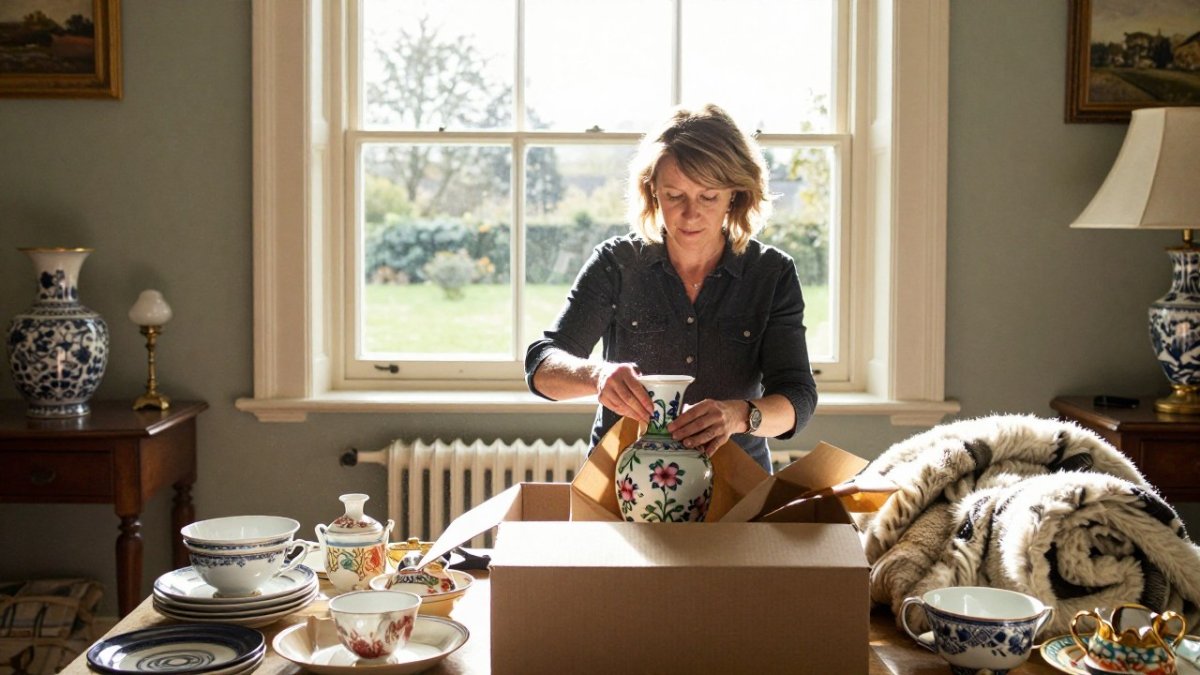
Packing antique furniture for moving is the step that decides whether a piece survives the journey intact. The goal is to protect the finish and stop any movement.
Start by emptying drawers and removing loose parts. Wrap knobs and handles in tissue, then bag the screws so they stay with the piece.

For the body of the piece:
Wrap delicate surfaces in acid-free tissue first
Add bubble wrap over the tissue, never directly on wood
Secure corners with protectors
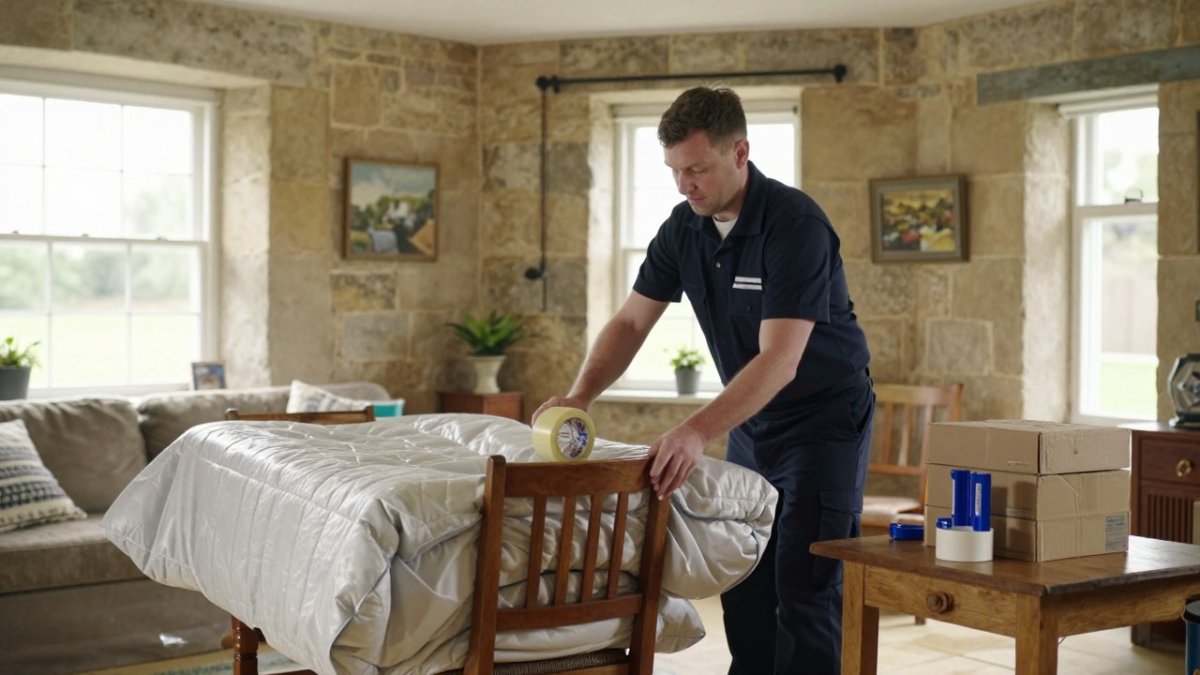
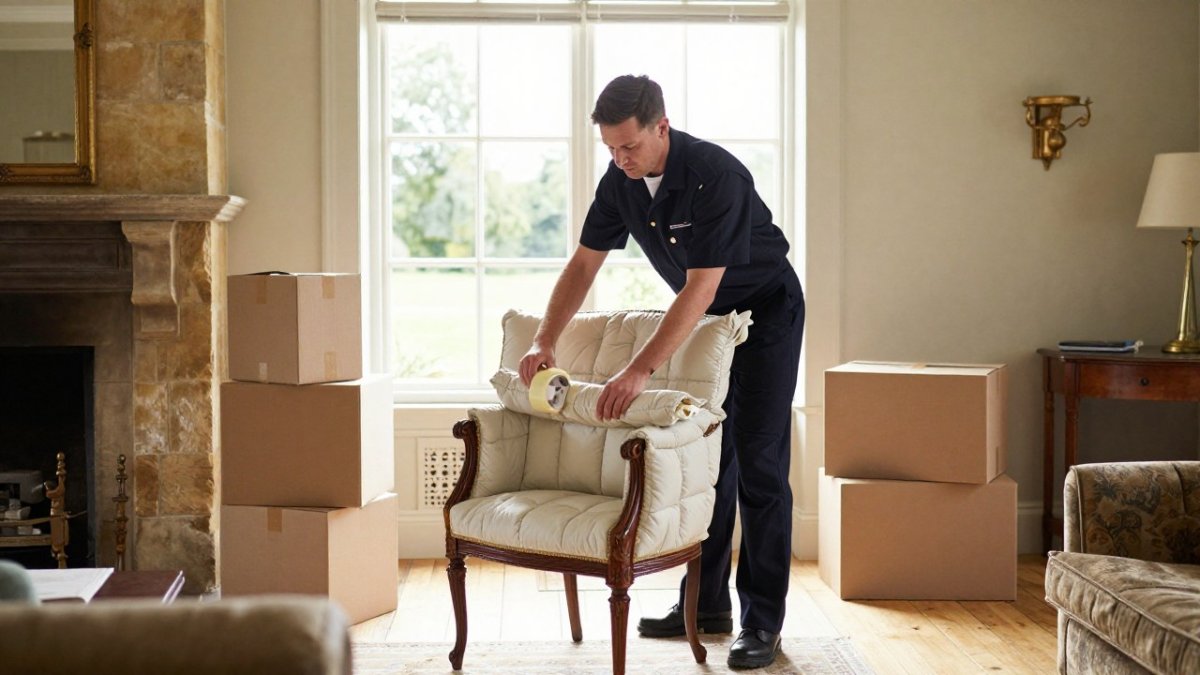
Cover the whole piece in a moving blanket
Tape only the blanket, never the wood itself. Adhesive can lift varnish.
Best Packing Materials for Antique Furniture
The best packing materials for antique furniture protect both the surface and the structure. Cheap materials often cost more in repairs.
Material | Best For | Avoid On |
Acid-free tissue | Delicate finishes, inlay | Nothing, it's safe |
Bubble wrap | Padding, edges | Bare wood |
Moving blankets | Full coverage | Wet surfaces |
Corner protectors | Sharp edges | Nothing |
Furniture straps | Securing loads | Loose parts |
Avoid newspaper as a direct wrap. The ink can stain light woods and fabrics. Avoid plastic sheeting too, because it traps moisture against the finish.
Watch Out Never wrap antique wood tightly in plastic. Trapped moisture can cause warping and mould, and the damage often shows up weeks later.
Moving a Heavy Antique Wardrobe
Moving a heavy antique wardrobe safely takes planning and the right help. These pieces are tall, top-heavy and easy to tip.
Empty the wardrobe completely first. Remove doors and shelves if they lift out. Measure the height against every doorway on the route.
Use a furniture trolley rated for the weight. Strap the wardrobe to it before tilting. Two people should guide it, one at each end.
Tilt slowly, never jerk
Keep the weight low and balanced
Pad the top corners for doorways
Lift with your legs, not your back
If the piece is genuinely too heavy or awkward, stop. A professional team has the kit and the training to move it without risk.
How to Move Antique Furniture Upstairs
Moving antique furniture upstairs is where most damage happens. Tight turns and narrow stairs leave little room for error.
Clear the staircase first. Remove pictures, rugs and anything loose. Check the banister for strength before you lean a load against it.
For stairs, use a strap or a stair-climbing trolley. Keep the heavy end at the bottom. One person guides from above, one supports from below.
Key Takeaway The safest way to move antique furniture upstairs is to let the piece do the work: use a trolley, keep the weight low, and never rush a turn.
For narrow staircases, consider removing the door or the banister rail. It sounds drastic, but it often saves the piece. If the turn is too tight, a hoist through a window may be the only safe option.
How to Move Antique Furniture Safely on the Day
The day itself is about control and calm. Here's a simple checklist to move antique furniture without damage:
Confirm the route is clear inside and out
Protect floors with mats or boards
Load heavy pieces first, against the walls
Strap everything so nothing shifts
Check the load before you drive off
Load the largest, heaviest pieces first. Place them against the vehicle walls. Fill gaps with blankets so nothing slides.
Keep the vehicle steady on turns. Antique joints are old and brittle, and a sharp jolt can crack them. Unload in reverse order, heaviest last.
Common Mistakes to Avoid When You Move Antique Furniture
The biggest mistake is treating antiques like ordinary furniture. They are not. Old wood, weak joints and delicate finishes need special care.
Here are the traps we see most often:
Lifting by the arms or top rail. These parts snap. Lift from the base.
Wrapping in plastic. It traps moisture and damages the finish.
Skipping the route check. A piece that won't fit wastes hours.
Rushing the stairs. Most damage happens on tight turns.
Moving alone. Heavy pieces need two people or a trolley.
Pro Tip If a piece has loose joints or a wobbly leg, fix it before the move. A small repair now prevents a bigger one later.
Conclusion
Moving antiques safely is a skill, and it starts with respect for the piece. The right materials, a clear route and a steady pace will protect what matters most.
If you'd rather hand the job to people who do this every day, Premier Cotswolds Movers & Clearers can help. Our bespoke removals service covers packing assistance, careful handling and full property clearances. We know the narrow stone doorways and tight staircases that make local moves tricky, and we plan for them.
Get a quote from Premier Cotswolds Movers & Clearers and move your antiques with confidence.
Frequently Asked Questions
Should you remove drawers and legs before moving antique furniture?
Yes, in most cases. Removing drawers, legs, and loose hardware reduces weight and prevents stress on joints during the move. Label each piece and bag the fixings so they can be reassembled correctly. For a heavy antique wardrobe, removing the doors and drawers can make it significantly easier to move antique furniture upstairs through tight spaces. Only remove parts that are designed to come apart; if a leg is glued or a joint is fragile, leave it in place and wrap the piece as a whole instead.
Can you use bubble wrap on antique furniture?
Bubble wrap is safe for most antique furniture as long as you use the right barrier. Wrap the piece first in acid-free tissue paper or a soft cotton sheet, then add bubble wrap on top. Never let bubble wrap touch polished wood, veneer, or upholstery directly, because the plastic can trap moisture and leave marks over time. Secure the wrap with low-tack tape rather than packing tape, which can pull off finish. For carved or gilded surfaces, use foam padding over the tissue instead of bubble wrap.
How do you move a heavy antique wardrobe safely?
Empty the wardrobe completely, remove doors and drawers, and strap the frame shut. Measure every doorway and stairwell on the route before lifting. Use a furniture trolley and lifting straps so two or three people can share the weight, and keep the wardrobe upright wherever possible. Tilt it only when necessary and never drag it across floors. If the piece is too heavy or the access is too tight, a professional removals team with piano skates and stair-climbing equipment will move it without damaging the wardrobe or your walls.
When should you hire professional movers for antiques?
Hire professionals when a piece is genuinely irreplaceable, very heavy, or the access is difficult, such as narrow stone doorways or spiral staircases. Also bring in a team if the furniture is gilded, veneered, or has fragile inlay that needs specialist handling. Professional movers carry insurance, use proper materials, and can dismantle and reassemble pieces correctly. For a single small item and easy ground-floor access, careful DIY packing is fine. For a house full of antiques, a bespoke removals service is usually the safer and cheaper option once damage risk is factored in.
Get a Quote
Comments